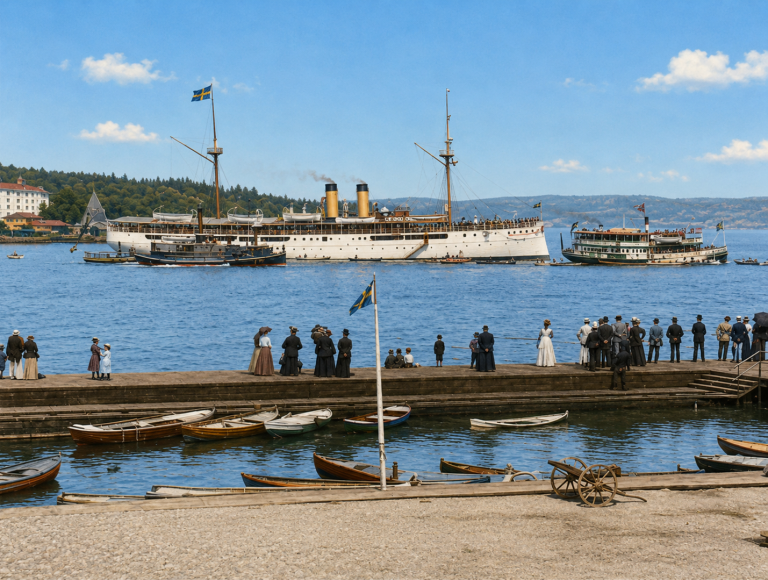
Maha Chakri in Härnösand Harbour
Following King Chulalongkorn’s Journey, 1897 Härnösand – Sundsvall
Härnösand
After eighteen hours of travel along the northern coastal landscape, the royal yacht Maha Chakri approached Härnösand. On July 16, at seven in the evening, the pilot Strömberg came aboard. Long before the vessel reached the harbor, the town and the entire Ångermanälven River had been set in motion.
Preparations were extensive, and anticipation filled the air. The steamers that normally maintained daily traffic had canceled their routes; instead, pleasure cruises were announced to meet the distant guest. Every vessel that could float was launched.
Among them was the steamer Pelle, commanded by Captain Wallin, who took aboard as many passengers as possible. The river filled with craft of all sizes - from small rowboats to proud steamers. Pelle passed them all and positioned herself near the pilot station, perfectly placed to witness the arrival.
Kings and emperors had traveled this river before - Oscar II and Wilhelm II had both been here only a few years earlier - but this was something different. This was a retinue from a distant realm, from Siam, carrying with it a sense of the unknown.
The reporter “Valle” from Vesternorrlands Allehanda described the moment with dramatic flair:
“After a short moment of feverish anticipation, two masts appear above a wooded headland… and on the gaff, a white elephant in the center. It is the flag of Siam.”
When Maha Chakri glided past Pelle, cheers erupted. Fourfold hurrays rose toward the sky. Rockets were fired from the boats, and music spread across the water. The great steam yacht slowly entered the harbor and anchored, surrounded by a swarm of vessels circling her like a festive centerpiece.
On board was King Chulalongkorn, and according to Consul General Axel Johnson, he received this extraordinary tribute with visible emotion. Yet a certain disappointment marked the evening - the royal party never went ashore. For the many who had gathered, only a distant glimpse remained.
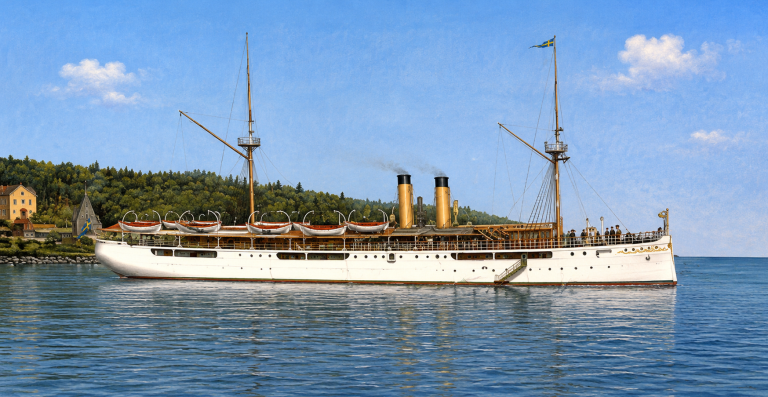
Maha Chakri
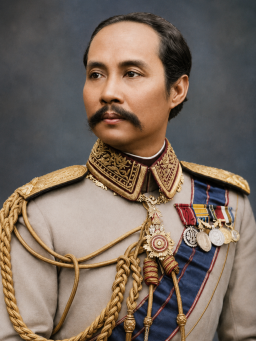
King Chulalongkorn
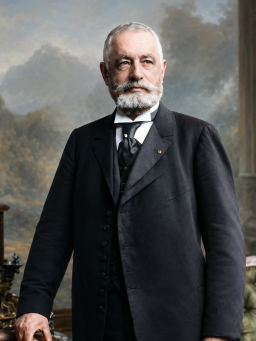
Axel Johnson
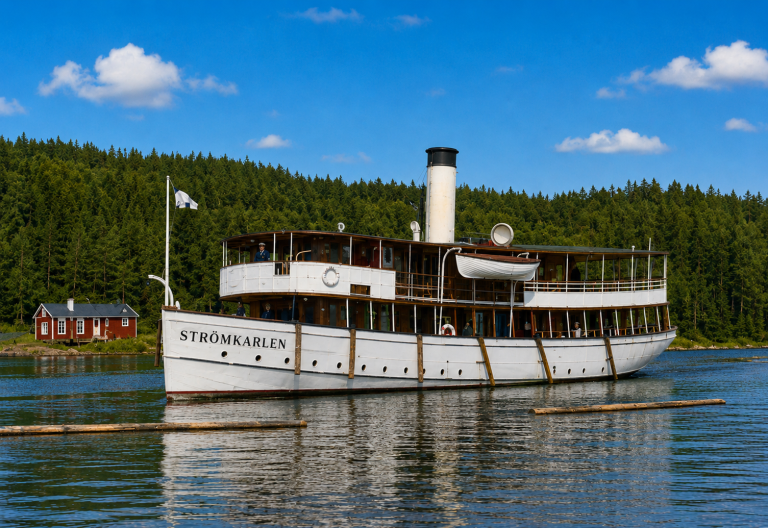
Strömkarlen
As evening fell over Ångermanland, a quiet shimmer settled over the scene. Valle ended his report in words that captured the spirit of the time:
“The sun has set, the summer night lies mysteriously dim over water and land. Out there in the harbor lies Maha Chakri, shimmering in electric light… Sleep well, King of Siam! May your first dream beneath the bright northern sky be as radiant and fair as this.”
The days that followed transformed the river into a living festival. The flag-decorated steamer Strömkarlen was placed at the royal party’s disposal, and when the king boarded, his own standard was raised.
The journey continued through the dramatic landscapes of the High Coast, where sea meets steep forests and cliffs.
On board, a calm prevailed - contrasting with the lively celebrations that greeted them everywhere.
The king showed great interest in the country he traveled through. He asked about timber floating, studied the industry, and noted how log houses became more common the further north they went. The landscape made a deep impression - grand and different, yet not unfamiliar.
Meanwhile, Maha Chakri was opened to visitors. People streamed aboard in an almost continuous flow. They observed, compared, and marveled. In the large containers of boiled rice and dried fish, many sensed something familiar - a reminder that the distance between worlds is sometimes smaller than one might think. Trade arose spontaneously; objects changed hands without words.
The royal quarters, however, remained closed. Through the press descriptions, a world of exquisite splendor emerged - salons filled with European elegance blended with oriental detail, shimmering with gold, silk, and gemstones.
When the excursion ended and evening once again settled over the river, the royal party was rowed back to the yacht. At nine o’clock, it was time to depart. An entire fleet had gathered to bid farewell.
A signal sounded. Flags were lowered and raised again. The anchor was lifted, the machinery came to life, and with one final piercing call from the siren, Maha Chakri set into motion. Slowly, she left the smaller boats behind, escorted up the river.
Along the shores, the celebrations continued. Salutes thundered, orchestras played, and thousands gathered. Everywhere, Swedish and Siamese flags waved side by side.
And there, on the upper deck, stood King Chulalongkorn himself - smiling, attentive, with quiet dignity - receiving a welcome that contemporaries believed had no equal.


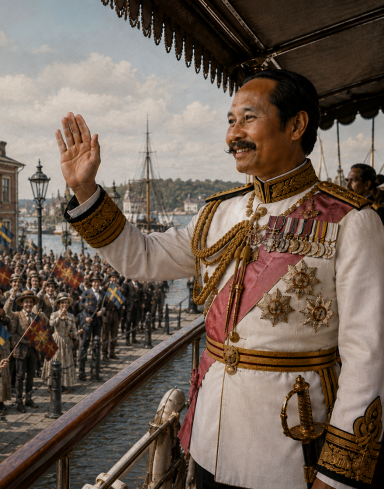
Sollefteå
In Sollefteå, preparations were intense yet dignified. Apothecary Askberg had devoted all his efforts to creating a reception worthy of the occasion. The entire town was decorated; flags waved from houses and farms, and at the steamboat quay a particularly grand structure had been erected - as if the river itself were to bear witness to the celebration.
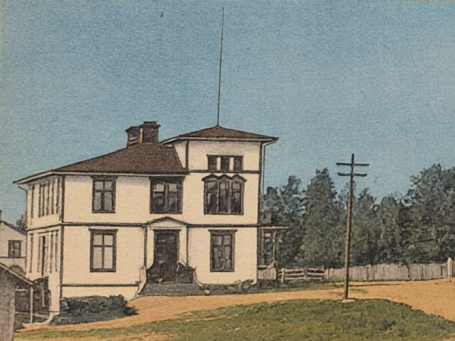
At Hotel Appelberg, everything was ready. Two rooms had been prepared for the king: a salon in yellow silk and a bedroom with the magnificent “royal bed,” once acquired for Oscar II. From the salon, a small balcony opened onto the main street, and on the upper glass veranda a café room had been arranged. Flowers and flags were everywhere - a quiet yet unmistakable tribute.
The streets between the hotel and the quay had been watered to keep the dust down. People arrived from near and far, many by train, and by mid-afternoon crowds began to gather by the river. Carriages lined up in long rows, horses stamping impatiently, as if sensing the weight of the moment.
As the steamer Strömkarlen approached, the river narrowed and the current quickened. On board, the entire party stood observing the landscape, where rapids foamed between high riverbanks. The king is said to have exclaimed, with simple yet heartfelt delight:
“What a wonderful country.”
A salute from Bruksmon answered him, echoing between the hills as the vessel docked.
Crown Bailiff Huss stepped aboard and escorted King Chulalongkorn and Prince Paribatra ashore. A cheer was called, and the people responded with resounding hurrays. The procession through the town became a passage through a sea of people - every step accompanied by waving hands and jubilation.
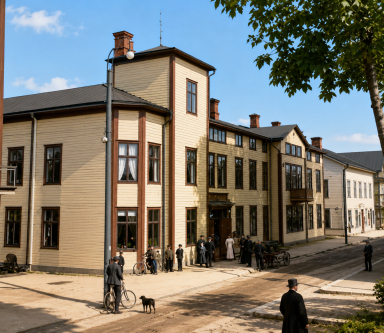
Hotel Appelberg
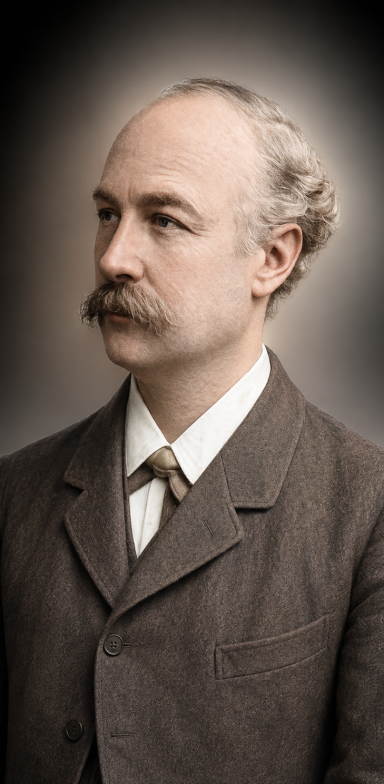
Crown Bailiff Anders Huss
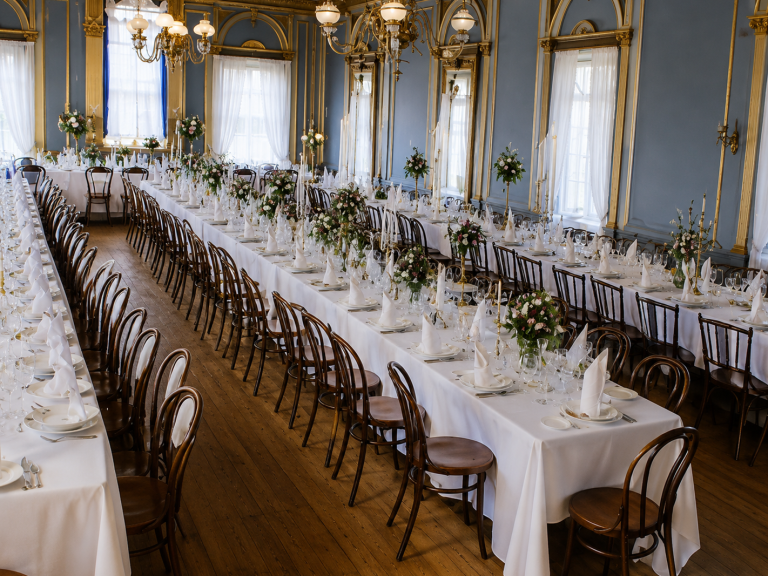
Inside Hotell Appelberg, Sollefteå
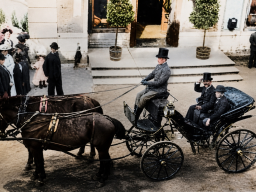
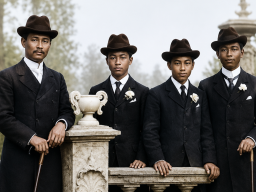
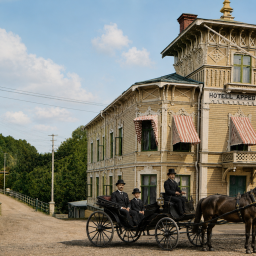
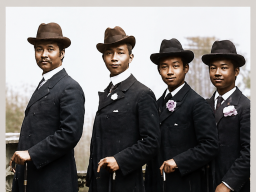
At the hotel, the host Appelberg received his guests, and soon the king and the princes appeared on the balcony. Cheers rose once more. Yet behind the formal occasion lay a more human reality: the planned excursion was officially canceled due to the king’s fatigue and the heat—but quietly, the king and princes slipped away to visit a photographer, and the younger members of the party even took a swim.
Later, they visited the salmon fishing grounds. The king rested in the shade while the princes tried their luck with fishing rods. The catch was modest, but the beauty of nature more than made up for it. Again and again, the same words returned - sometimes even in Swedish:
“What a beautiful country you inhabit.”
That evening, dinner was served with great care. The table was decorated with small bouquets in Swedish and Siamese colors. Courses followed one another in a long procession, and conversations flowed in an atmosphere of ceremony and familiarity.
After dinner, coffee was served on the veranda. Later, Captain Hedborg was honored with a Siamese order. The evening softened into quieter moments - walks, conversations, and more coffee, now accompanied by punch, as the town slowly sank into the summer night.
Despite his fatigue, King Chulalongkorn took time to write to his queen, Mä Lek. In his letter, not only the monarch appears - but the man: struggling with sleeplessness, unfamiliar food, and physical exhaustion, yet deeply moved by the Nordic landscape.
He described how the sun lingered late into the evening, how the sky never truly darkened, how light moved between red and white along the horizon. He wrote of timber floating, forests, and sawmills - so different from home, yet strangely familiar.
Toward the end, the tone became more personal. He expressed concern for the queen’s health, counted the days of his absence, and longed for reunion:
“I am anxious about your health… I have now been away for 103 days… there are three months left until I see you.”
And with that, the letter ended - a quiet reminder that even amid ceremonies, honors, and historic moments, there is always a human being longing for home.
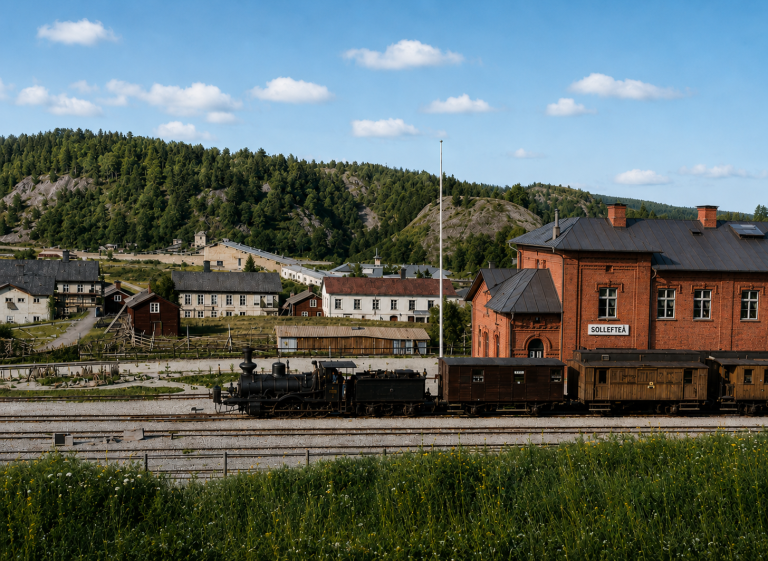
Rail Way Station Sollefteå
The King’s Journey Through Fors
Monday, July 19, 1897, dawned clear and still over Sollefteå. The summer air already lay warm over the town, and at the railway station the special royal train stood ready for departure. The locomotive exhaled heavily, as if it too were aware of the significance of the moment. Behind it followed the royal carriage, a saloon car, and a bogie carriage - a discreet yet unmistakable sign that this was no ordinary journey.
Breakfast was taken at Hotel Appelberg, but outside, crowds had already gathered. Over the course of just a few days, visitors from distant Siam had become the subject of conversation in every home. Now people wanted to see them one last time.
When the moment came, King Chulalongkorn left the hotel by carriage, while the princes and the rest of the entourage chose to walk through the town. It was as if the town itself moved with them - people followed step by step until they reached the station. There, the air filled with movement and anticipation. Flowers were handed forward. Crown Bailiff Huss called for a cheer. The jubilation rose, and the king responded calmly and with dignity - his quiet presence leaving a deep impression.
Then the train began to move.
It disappeared around the bend, and in that same moment Sollefteå slowly returned to everyday life.
But for those who remained, things were not quite the same.
During the journey, the landscape gradually changed. The open views along the river, with sawmills and industry, faded away. In their place came something else - denser forests, rising mountains, a nature that carried a quiet gravity. The king’s private secretary, Mr. Seng, sat taking notes:
“It is forested and mountainous… the river with rapids and waterfalls… it resembles northern Siam.”
The resemblance was unexpected - but real.
As the train approached Bispgården and the Indalsälven valley, the landscape grew wilder, more untouched. Here, traces of human presence were fewer. Nature spoke with a different voice - quieter, yet deeper.
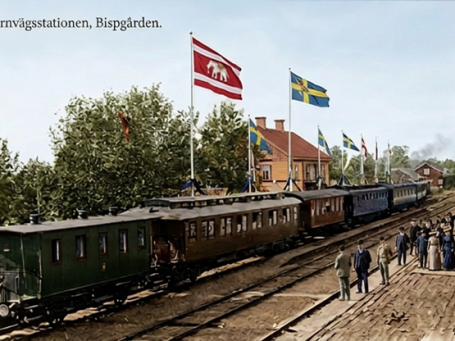
At Bispgården railway station, people were already gathered. Expectation hung thick in the air. As the train slowed and finally came to a stop, King Chulalongkorn stepped down - with a liveliness many remarked upon.
A new cheer rose toward the sky.
And this time, the people answered in unison.The party then walked between double rows of flags down toward the tourist hotel. There, a group of children dressed in white waited with flowers in their hands. The king smiled, accepted the tribute - and in a spontaneous moment lifted one of the children.
What appeared to be a little girl turned out to be three-year-old Theodor Näsström, with fair curls.
A moment of warmth.
A memory that would live on.
Lunch at the Tourist Hotel had been carefully prepared.
Instructions had been sent from Stockholm. New tableware had been acquired. Silver had been borrowed from local homes.
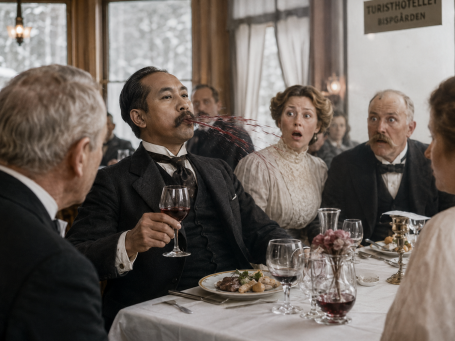
The meal was served in several courses - fish, soup, salmon, reindeer roast. Wines accompanied each dish, and the atmosphere gradually rose.
Until something happened.
When the king took a sip of the red Burgundy, everything stopped.
He spat it out.
For a moment, the room froze. No one dared say a word. But the king calmly continued eating, seemingly unaffected.
The explanation would later prove simple - the wine had been served too cold. For a man attentive to detail, it was a small but decisive matter.
The lunch continued.
And, despite everything, it was a success.
The Indalsälven River
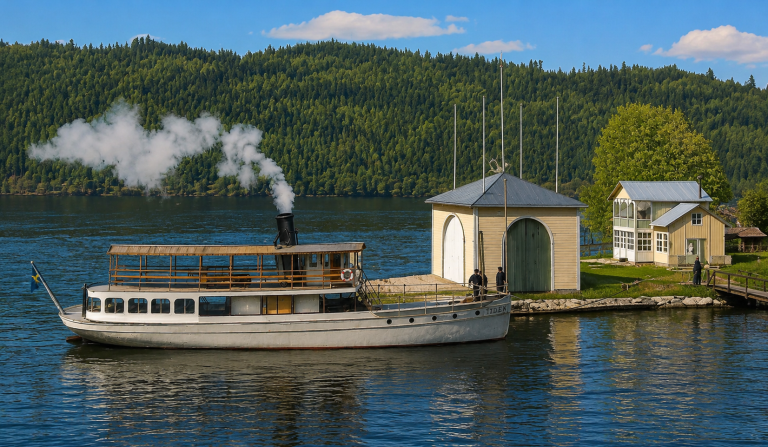
After the meal, a short walk was taken to a viewpoint behind the hotel. The river lay below, calm yet powerful. The landscape spoke in broad lines.
But time was short.
The journey would continue.
The next stage was by horse and carriage down toward Edset. The road was narrow and dusty, winding through forest and open vistas. Here and there, the land opened toward the river, where the water rushed through rapids.
People stood gathered along the road. Children ran forward.
From the royal carriage, sweets were thrown out - small moments of joy that made the day even greater.
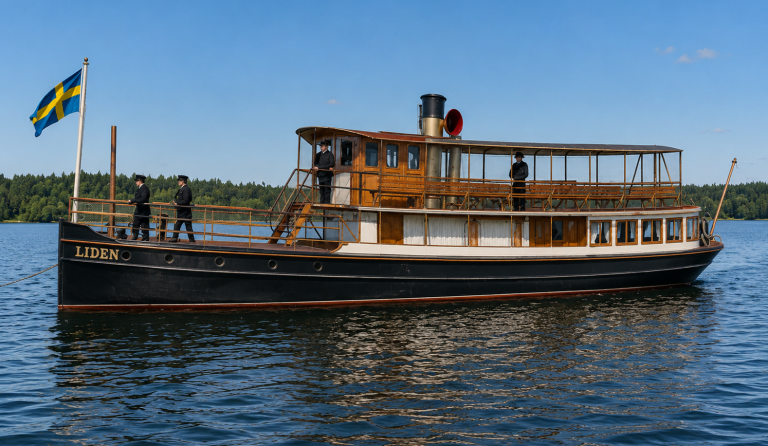
At Edset, preparations had been underway for a long time. The pier was decorated with flags. A triumphal arch had been erected, adorned with spruce branches and birch leaves. Above it appeared Siam’s symbol - the white elephant on a red field.
But only hours earlier, something unexpected had occurred.
A forest fire had broken out.
The flames had threatened to destroy everything - the pier, the decorations, the entire reception.
But it had been extinguished in time.
The king was never told how close it had been.
At the pier lay the steamer Liden, decorated with green garlands. It rested with its bow facing the current, ready to confront the river’s force.
Crowds had gathered in great numbers - on both sides of the river.
There, among them, stood Anna. Eleven years old. She had picked water lilies.
When the king stepped forward, she curtsied as beautifully as she could and offered her bouquet. He accepted it, spoke a few kind words she did not understand.
But she would remember his gaze. For the rest of her life. Then the party boarded.
The moorings were cast off. The steam whistle sounded.
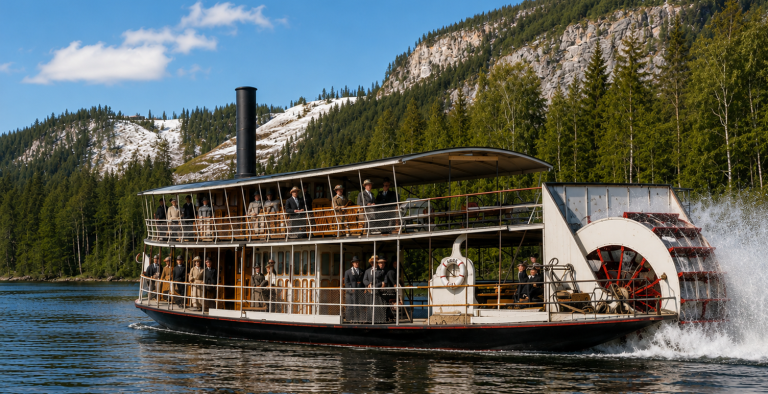
Slowly, the vessel moved out into the current. The water churned white around the hull as Liden turned in the powerful rapids before beginning its journey downstream.
From the shore came one final cry:
“Long live the King of Siam!”
And the answer came like a wave of voices - cheers and waving hands.
The journey continued.
But something remained behind.
In Fors.
In memories.
In stories.
King Chulalongkorn’s visit had lasted only a few hours - but it left traces that would not fade.
And perhaps Crown Bailiff Söderman stood longer than anyone else by the riverbank, reflecting.
Not at the reception.
Not at the celebrations.
But in a single detail:
Why the king had spat out the wine.

Thus began the next stage of the journey - downstream, into the wild landscape where the river itself became the road forward.
What followed was later described as a journey both daring and magnificent. The steamer Liden lay with its stern facing the direction of travel, and to continue downstream toward Sundsvall, she first had to turn in the powerful rapids. Captain Holmberg let the vessel glide slowly into the foaming water, bow facing the current. A tense silence fell over those on board. Everyone knew the decisive moment was approaching.
The maneuver had to be made midstream.
Suddenly, the steamer swung - swiftly, precisely, as if guided by an invisible hand. The bow was thrown toward the shore, the rudder caught, and in a single powerful motion the turn was completed. A murmur passed through the company. The danger was over, and the journey could continue.
Thus began the descent along the river - fast, alive, filled with motion. The water pressed forward between high, pine-covered mountains, and Liden moved skillfully from side to side to avoid shallows and treacherous rocks. It was a journey that demanded both courage and precision.
King Chulalongkorn followed everything with great interest and is said to have remarked, with sincere admiration:
“I congratulate the people on having such a steamer that can pass these rapids.”
At the landing at Glimån, the first stop of the day was made. During the journey, Captain Nordberg had carefully explained the life of the river - the boats, the timber floating, the work that connected forest and sea. Mr. Seng took diligent notes in his diary: about the vessel’s construction, its shallow draft, and the millions of logs that traveled this route each year, carried by the current from forest to coast.
But the true highlight of the day still awaited.
At the foot of Glimberget, the timber company had arranged a special demonstration in honor of the king. From the heights ran a long, curved chute - a construction resembling alpine log slides. High above, out of sight, logs were released one by one. With tremendous speed, they hurtled down the chute, and after a breathtaking minute they were thrown into the river with a roar that echoed between the mountains.
The party went ashore to witness this remarkable spectacle. When one of the larger logs struck the water, a cascade rose into the air, and within its mist a rainbow appeared - clear and fleeting. The king stood still, deeply moved. Nothing like it existed in his homeland.
Mr. Seng noted how the logs, which from above had seemed like small sticks, were in reality six to ten meters long and as massive as tree trunks should be. A work of such scale and precision inspired respect.
When the demonstration ended, the next steamer lay ready - the Indalen. Larger, inspired by American riverboats, with broad decks and spacious saloons, it was richly decorated with fabrics, flowers, and greenery - as if the vessel itself took part in the celebration.
On board, a dinner worthy of the occasion awaited. Tables were set on the upper deck, and courses followed one another - salmon from the river, meats, vegetables, and finally fruit and berries. Wines were served, and between courses tea was prepared by the king himself using his small traveling stove - a detail that inspired both curiosity and admiration.
Meanwhile, the river widened. The current calmed, the landscape opened, and forests gave way to scattered farms and villages. At Indal, the smokestack was lowered to pass beneath the bridge, and further downstream a wedding party stood gathered along the shore, eager to be seen by the foreign king. The gesture was appreciated, and the greeting was returned.
As evening approached, the party reached Berge. Here, the rapids halted further passage, and the travelers had to continue on foot past the roaring water, while luggage was transported along a narrow track by the shore. On the iron bridge, many paused to gaze at the rapids - and to meet the hundreds of people gathered there.
A wreath of flowers, adorned in Siam’s colors, was presented to King Chulalongkorn - a quiet yet heartfelt tribute.
The final stage awaited.
The steamer Turisten, larger and even more comfortable, lay ready. Beautifully decorated, with a band on board, it received the party amid renewed cheers. Along the riverbanks, people followed the journey with their eyes and waving hands.
The voyage continued toward Sundsvall - through a landscape where nature, labor, and human presence were woven together, and where every bend in the river seemed to carry yet another tribute to the distant guest.
Sundsvall
At the mouth of the river, an entire fleet had gathered - as if the water itself had summoned its vessels to escort the royal guest. Steamers from near and far lay ready to accompany Turisten - the “Royal Boat” - into Sundsvall. Through the Alnösundet strait, the procession grew; more and more boats joined, all filled to the brim with festively dressed people waving white cloths and cheering.
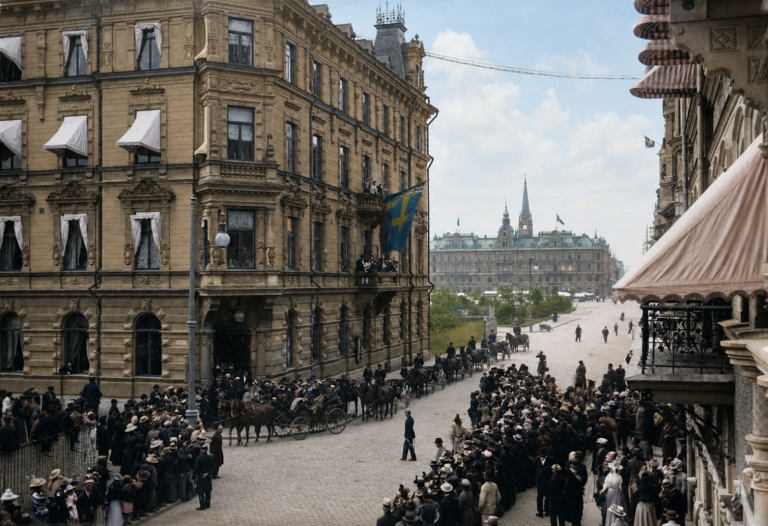
Contemporary newspapers described the arrival as a triumphal procession. The steamer glided across the bay with the Siamese silk flag flying at the foremast, followed by an entire armada of vessels. Along the shores, flags waved from sawmills and cargo steamers, and from mast to mast, signals fluttered in colors and patterns. It was a spectacle of movement, color, and sound - a tribute as much to the guest as to the moment itself.
Although no one knew for certain whether the royal party would go ashore, several thousand people had gathered at the harbor.
Some had climbed the masts of ships, others the rooftops, all to gain a better view of the bay. Part of the quay had been draped in blue fabric, in anticipation that King Chulalongkorn might set foot there.
Then the salute rang out - nineteen shots rolling across the water. Expectation rose. But Turisten passed by and instead anchored some distance from Maha Chakri. A rowing boat with twenty men was sent out, and with steady, powerful strokes, the king and princes were transferred to the royal yacht.
A steam launch carried the rest of the party, while music from both vessels blended Swedish and Siamese melodies across the bay.
For many, it was only a glimpse - a fleeting presence to carry in memory. Throughout the following day, small boats continued to circle the yacht, hoping for a closer encounter. On board, the crew could be seen resting; they played games on deck and tossed small red berries down to the people in the boats below - a simple gesture that created joy and a sense of connection.
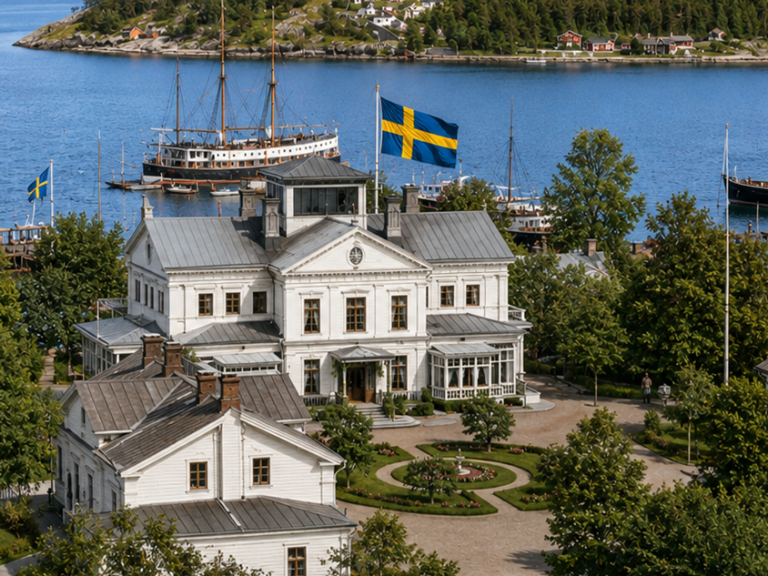
Kubikenborg Manor
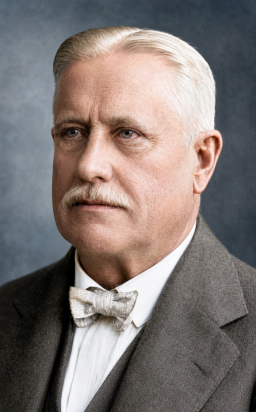
Director
August Enhörning
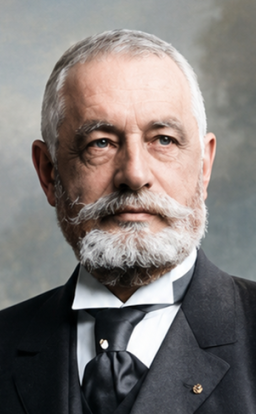
Consul General
Axel Johnson
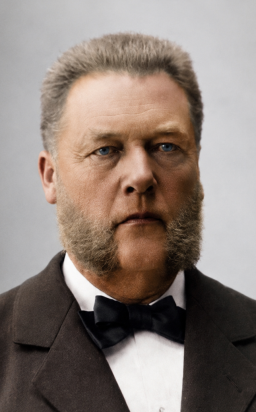
Harbour Master
Adolf Nordberg
Then came the final morning of the visit to Sweden.
Sundsvall awoke early. The harbor stood in festive attire, flags raised high, a brass band in place, and soldiers drawn up in formation. Horse-drawn carriages waited, with Director Enhörning’s carriage at the front.
At half past eleven, the royal party stepped ashore to the sound of the Siamese national song. King Chulalongkorn took his place in the first carriage, followed by Prince Paribatra and the others. They wore raincoats—a quiet reminder that the sunny weather had turned. No speeches were given, yet the atmosphere was unmistakable: a meeting of worlds, quiet but meaningful.
The procession continued to Kubikenborg Manor, where the Enhörning family received their guests. Salutes were fired, flowers presented, and the sawmill was shown—the place where timber, carried down the rivers, was finally transformed. The king saw with his own eyes how nature’s resources became trade and craftsmanship.
After some time together, the party returned to the town. Shopping for souvenirs followed - items of Swedish handicraft, baskets, birch-bark work, and knives of Eskilstuna steel - small objects to carry home from the northern land.
Lunch was taken at Hotel Knaust, where crowds once again gathered outside. The king appeared on the balcony and returned the greetings - a final gesture of presence before departure.
In the afternoon, he returned to Maha Chakri. Before boarding, he sent a telegram to King Oscar II, expressing his gratitude for the hospitality shown during his journey through Norrland. Consul General Johnson and Harbour Master Nordberg were invited to accompany the party out to the Maha Chakri, where Johnson received the Commander’s insignia of the Knight of the Order of the Crown of Siam.During a ceremony on board, decorations were awarded to those who had played significant roles during the journey - tokens of appreciation and friendship across national borders.
At 5:15 p.m., the yacht weighed anchor and was guided out from the harbor. The weather had changed; the wind rose and the sea grew rough. Many among the crew became seasick, but the king himself remained unaffected. Toward evening, the wind subsided, and in the stillness of the night, the journey continued southward, toward new destinations.
Thus, Maha Chakri left the northern Swedish coast - and with it, a journey that had brought together people, landscapes, and cultures in an encounter that would live on long after the waves had closed behind her.
New Times
When King Chulalongkorn himself chose this journey in 1897 as part of his visit to Sweden, the Indalsälven tourist route was firmly established as something of international significance. Here, not only nature and technology met -but also cultures, ambitions, and visions of the future.
The very conditions that made such a journey possible had, in turn, been created far beyond the forests of Jämtland - through the opening of the Suez Canal, a global artery that made Europe accessible to the wider world.
After the Hölleforsen hydroelectric power plant rose from the waters of the Indalsälven in the late 1940s, the landscape changed fundamentally. Yet, in the midst of this new era, the Swedish State Power Board chose also to look back.
They restored the old road - the one built between 1892 and 1894 from Holmsta down to the steamboat harbor at Edset. This was no ordinary road.
It was a passage through history.
Here, King Chulalongkorn had traveled on July 19, 1897, during his journey through the northern Swedish landscape.
When the road was brought back to life, it was also given a name that would carry its memory forward: King Chulalongkorn’s Road.
To this day, it winds quietly through the landscape - unassuming, yet filled with stories. Royal wheels once rolled here. Worlds met here. Travelers passed through, turning a remote river valley into a point on the international map.